

Vault Bay
For landmark vehicles, owners who want separation and cars whose intake notes or access preferences justify a more private architectural setting.
Vaultline Reserve is for owners of supercars, collection pieces and significant classics who want more than indoor parking. The service considers the full storage context: environment, technical routine, intake notes, release planning and the practical details that keep a valuable car under active care while it is off the road.

Long-term vehicle care starts with context. The right room, an agreed observation rhythm and clear handling notes reduce uncertainty and make every collection or release more deliberate.
High-value modern performance cars often need thought around tyre loading, battery conditioning, clearance, access and release readiness.
Owners with more than one car usually care about records, routines and presentation standard as much as they care about secure indoor space.
Older vehicles benefit from a calmer rhythm, careful notation and selective intervention rather than assumptions or unnecessary handling.

Each environment is intended for a different ownership pattern, from frequently used performance cars to long-term collection pieces requiring greater separation and a more individual routine.
For landmark vehicles, owners who want separation and cars whose intake notes or access preferences justify a more private architectural setting.

Suited to classics and collector cars that benefit from a calmer visual environment, discreet covers and an approach that feels closer to stewardship than storage.

A controlled setting for documented observation, battery support, visual checks and release preparation without the clutter or noise of a routine workshop.
The sequence is deliberately simple: record the vehicle properly, observe it on schedule, communicate anything that changes and prepare it carefully for release.
Visible condition, mileage, keys, tyre state, known marks and owner instructions are logged before the vehicle is placed into its storage environment.
Scheduled observation covers battery condition where appropriate, stance, visible leaks, cabin and surface checks and any car-specific notes retained at intake.
If a review identifies something that should be discussed, the observation is documented and escalated rather than being ignored or acted upon without instruction.
Collection is arranged by appointment so the vehicle can be prepared, disconnected from relevant conditioning equipment and presented in the agreed state.
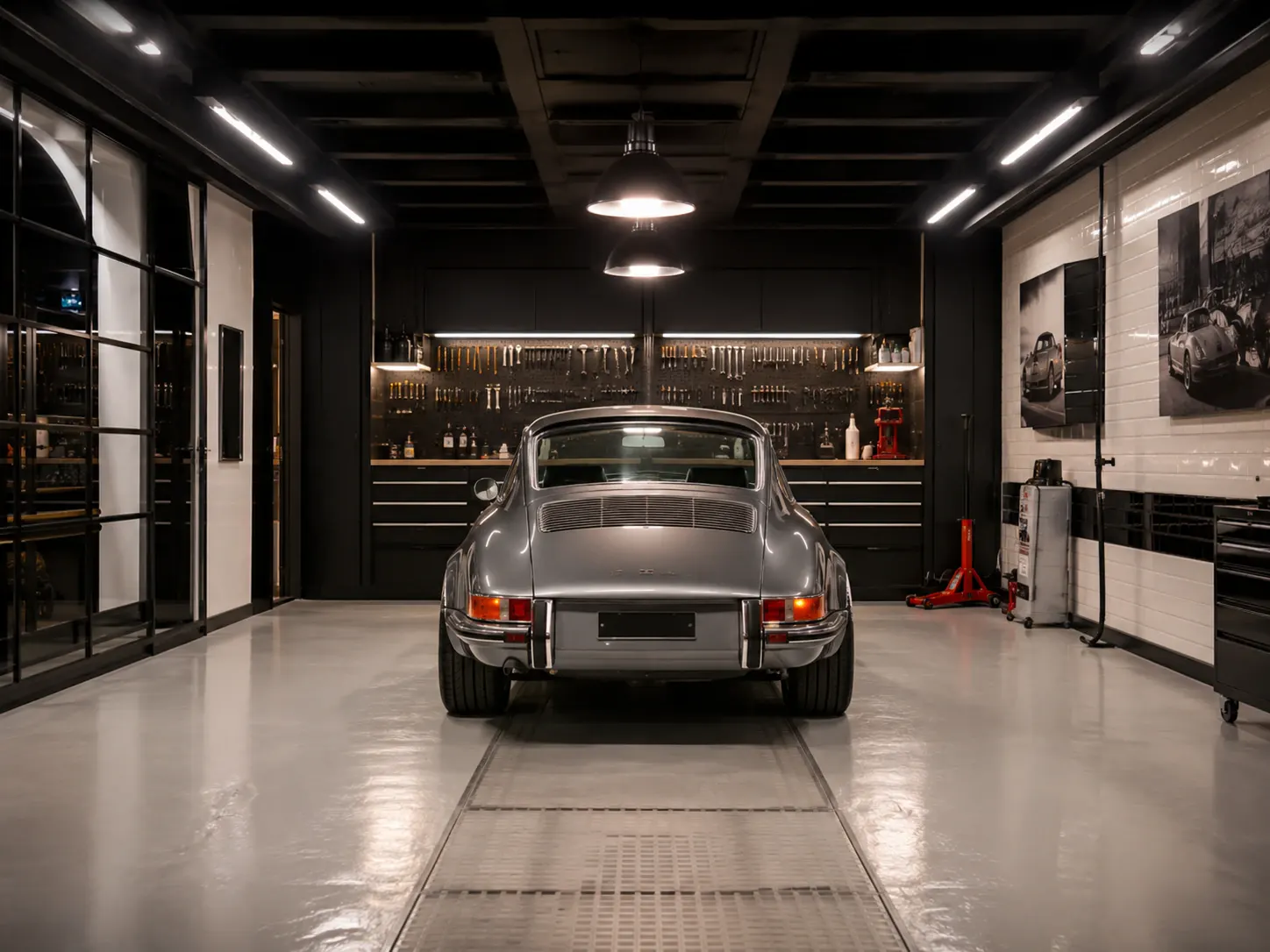
People who use the car selectively, travel often or maintain more than one residence, and want the car ready without leaving it in unmanaged downtime.
Owners who rotate multiple vehicles, want continuity across records and expect the presentation standard to feel worthy of the collection itself.
People who understand that older vehicles rarely benefit from being parked indefinitely without deliberate observation and careful release planning.

Seasonal access, private handling, transport, battery procedures and the number of vehicles all influence what a sensible long-term arrangement looks like. Those details are considered before intake rather than treated as extras afterwards.
Starting prices reflect the level of care and environment rather than floor area alone. A final quotation is prepared after the vehicle, expected duration and any special requirements have been reviewed.
For frequently used performance or prestige cars needing a dependable indoor base with routine condition observation.
For collector vehicles, classics and longer-term placements where a stronger preservation routine matters.
For owners who prefer a dedicated suite, more separation and vehicle-specific instructions retained throughout storage.
This estimator guides budget expectations only. Unusual vehicle dimensions, enclosed transport, specialist battery requirements or a private suite request can all change the final quotation.

Collection and return are costed separately because distance, enclosure level and timing can vary widely.
Low-clearance bodywork, unusual width, covers, trackers or battery procedures should be disclosed before intake.
Collectors with more than one car often need a storage review that considers the collection as a system rather than quoting each vehicle in isolation.
Share the vehicle, expected storage period and any practical requirements that may affect handling, access or transport. That information is used to suggest a suitable environment and care level before intake is arranged.